
Summary: Dealers can turn their service lane into a powerful used-vehicle acquisition channel by identifying high-value vehicles during scheduled service visits, using real-time inspection data to inform appraisals, and proactively engaging customers with transparent trade-in offers. With customers holding vehicles longer and showing increased interest in value discussions during service, dealerships that connect service, inventory, and CRM workflows can acquire vehicles more efficiently while protecting margin and improving customer experience.
A hot topic in the industry right now is finding better ways to source used vehicles. With vehicle and transportation costs higher than ever, dealers are looking for alternatives to sourcing at auction. Increasingly, they’re turning to their existing customers instead.
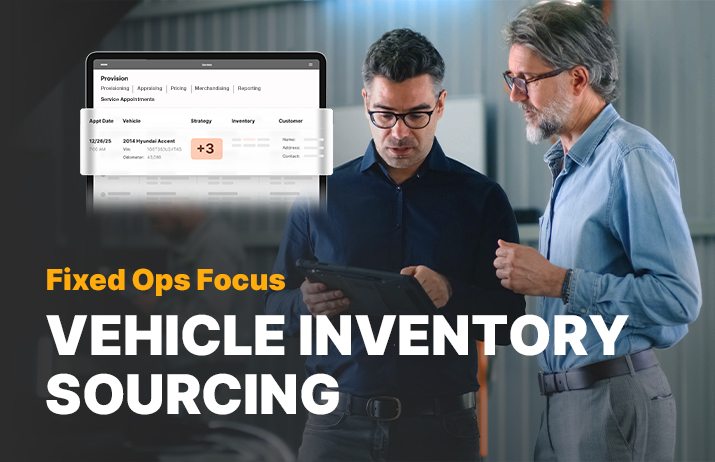
In the latest session in our Fixed Ops Focus Series: Vehicle Inventory Sourcing Featuring vAuto and VinSolutions, Cox Automotive experts Taylor Finch-Thompson, Jonathan Brown and Brett O’Rear discussed the trend of sourcing used vehicle inventory from the service lane.
The opportunities presented by shopping your service drive are clear:
- Maintenance and repair records, including multipoint inspections, already on file
- Customers with scheduled service appointments
- The chance to sell another vehicle to an existing customer
That sounds great, but how do you create a system to regularly add vehicles to your used inventory? Fortunately, the full suite of Xtime solutions encompass every single touchpoint and engagement that your dealership will have before, during and after the service visit with your customers. Then, vAuto and VinSolutions help cement the acquisition with valuation and a predictable process.
Let’s look at how each of these solutions play a role in the used vehicle acquisition process.
The First Step: Scheduling
Scheduling the appointment is a clear starting point because it gets customers back into the store to have their vehicle worked on. Xtime Schedule lets customers conveniently schedule an appointment from any device, 24/7 and in the background, it’s aligning available appointment slots with your service lane capacity and expertise.
It also presents the customer with good/better/best menus, open and active recalls, and vehicle warranty information to help them choose the right service package for their needs and budget.
But one more important thing Schedule does is automatically inform you about potential acquisition targets coming into the dealership. So, now you know exactly when a desirable vehicle will be pulling into the service drive.
Setting the Stage with the Inspection
As the technician is doing the inspection, they’re making recommendations of services that the vehicle needs. Xtime Inspect helps you do a better job selling the work during the service visit, increasing the RO value, and capturing any work that gets declined.
You can leverage that data to present those services to the consumer again during the next visit. But you can also use the data to build a vAuto appraisal and inform your vehicle acquisition manager of the work that needs to be done to get the vehicle frontline ready.
The Cox Automotive 2026 Fixed Ops and Ownership Study shows that consumers start considering trading in their vehicle instead of repairing it once the cost exceeds $3,000. So, many of your customers are open to an appraisal after the inspection has been completed.
With Xtime Inspect data feeding into the appraisal, your dealership can proactively identify owners already raising their hand through a service appointment.
Setting Up Your Acquisition Workflow
Acquisition has never been more competitive or more expensive than it is today. So, why not start by targeting the lowest hanging fruit already engaging with your dealership?
The workflow described below is designed for whoever owns the acquisition strategy at the dealership, whether that’s the used car manager, the acquisition manager, used car director, or any variable ops leadership.
The goal is to create a process for buying the most profitable vehicles from your service lane.
First, you’ll set up automated searches within your inventory tool based on filtering criteria such as service appointments, inventory needs, and vAuto ProfitTime® GPS value scores. That way you can identify the vehicles that make the most sense for the dealership.
Once you’ve identified a potential acquisition, you’ll push it as a lead to your VinSolutions CRM. That will let you confirm whether the customer is already in your CRM, which mitigates duplicate lead creation and keeps your data cleaner. You can then set an appraisal appointment with the BDC or sales rep.
The acquisition team can actively track who has been contacted, who has engaged with each lead, who has not yet been sent a lead, and how the opportunities are progressing.
Making the Offer
After identifying the opportunity within any lead and completing an appraisal, the dealership can generate a professional, consumer-facing offer directly tied to that customer’s vehicle.
Today’s consumers expect a level of transparency and immediacy, so it’s not enough to tell them the dealership is interested in their vehicle – they want to know what their vehicle may be worth today and why.
The consumer offer helps you tell the story of their vehicle’s actual value, minus the repair costs you identified during the inspection. That gives them good insights into what their vehicle is worth today, and you can often present them an offer right away.
Implementing Your Service-to-Sales Acquisition Strategy
Instead of relying exclusively on outside inventory acquisition channels where competition and costs continue to rise, dealerships can now leverage key solutions as a scalable acquisition engine that they can actively monitor across the entire Cox Automotive ecosystem.
By connecting Xtime, vAuto and VinSolutions to create a powerful acquisition workflow, the dealership gains valuable visibility, timing, and proactive engagement with customers they already know.
Want to learn more? Schedule a discussion with us.