
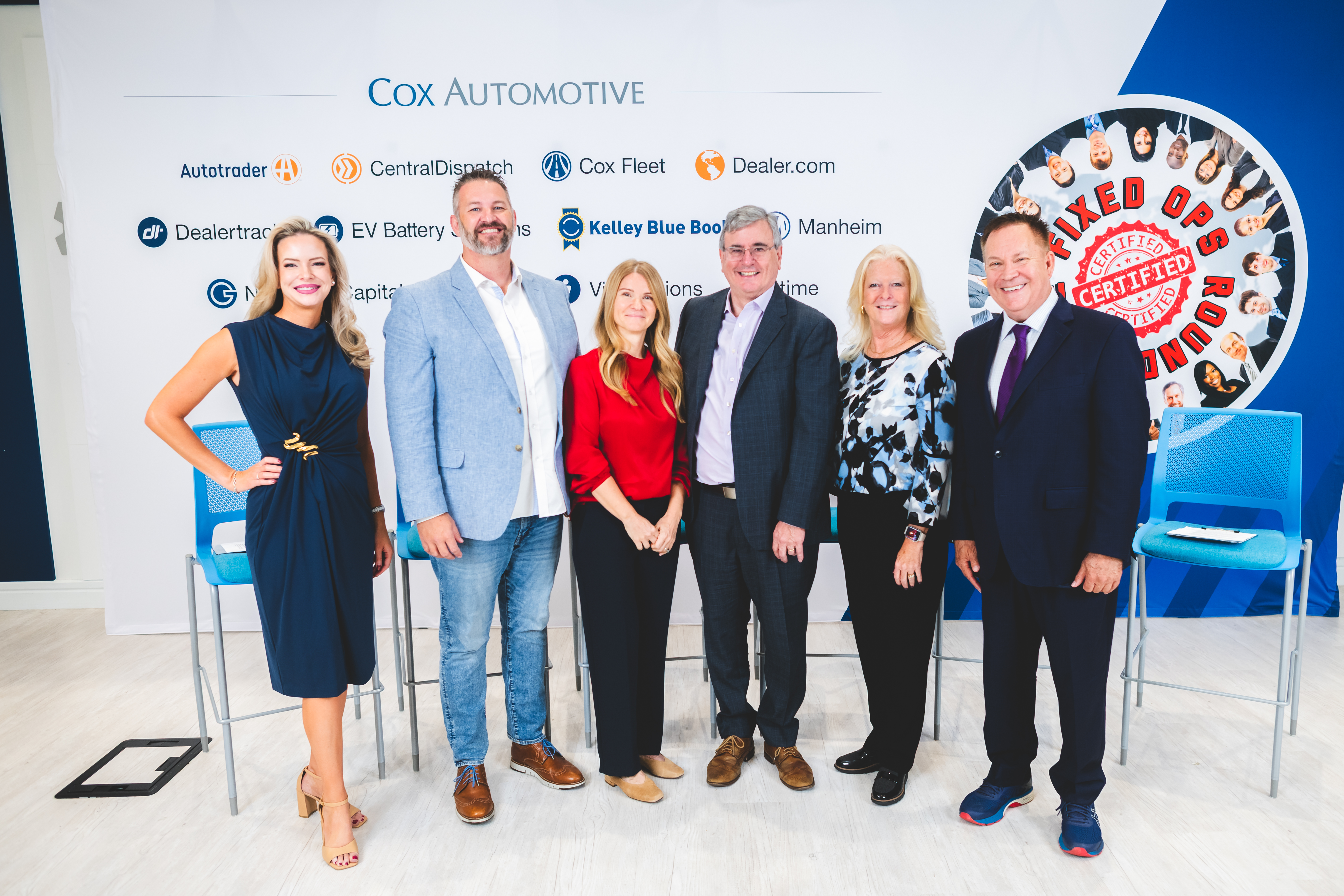
Dealership service revenue is growing, but many dealers are losing customers underneath it. More complex vehicles and higher repair costs can inflate revenue while fewer customers actually return. Hard-to-book appointments, poor communication, and unclear pricing push customers to independent shops. Service customers are also far more likely to buy their next vehicle from the dealer who services their car.
Hear our Cox Automotive leaders and The Niello Company explain why service retention is a profitability issue, what it’s worth, and how to start improving it.

Why Service Retention Is Slipping, Even as Revenue Grows
Service revenue is up across the industry, so why are dealers still losing visits? Our panelists discuss what’s driving customers away, what it costs, and why retention, not just revenue, should be the number dealers watch.
In this video:
- How rising service revenue can hide falling retention
- Why price transparency and easy scheduling matter
- How service experience affects the next vehicle purchase
- What each lost customer is worth over time

Turning Retention Data into Dealer Value
Retention is both a customer experience metric and a profit driver. In this conversation, our panelists cover where profitability and lifetime value leak, which measures help dealers spot the gaps, and how to build an actionable retention plan.
In this video:
- Where dealers lose customers between visits
- When to time and personalize outreach so it feels helpful, not pushy
- How connected systems and clear ownership make retention plans stick
- Why fixed ops deserve more investment, and more of your website
Key retention stats from the roundtable
Customers who service at the dealership are 74% likely to buy their next vehicle there. That drops to 44% for those who don’t.
Source: 2026 Cox Automotive Fixed Ops and Ownership Study
Estimated cost of winning a new customer versus keeping one
Source: 2026 Cox Automotive Fixed Ops and Ownership Study
What dealers can do now
- Measure retention, not just CSI. Track how many customers actually come back.
- Make it easy. Offer simple online scheduling, a fast answer when the phone rings, and service hours that fit customers’ lives.
- Show pricing up front. Transparency builds trust before the customer arrives.
- Schedule the first service visit at the time of sale. Introduce new owners to service early.
- Stay connected between visits. Use vehicle data to time outreach, say thank you, and keep owners informed, including what their car is worth.
- Connect your systems. Make sure the message matches the customer’s situation, and make declined services easy to approve with a single click.
- Assign ownership. Someone has to measure, follow up, and report. Leadership sets the priority.
Meet the panel
Brenda Berg
Strategic Sales Director,
Cox Automotive
Anya Schlesener
VP Dealer Operations,
Cox Automotive
Skyler Chadwick
Director Product Consulting, Cox Automotive
Tully Williams
Parts & Service Director,
The Niello Company
Hosted by Ted Ings and Sarah Vantine
Frequently asked questions
Service retention is the share of customers who return to the dealership for service. It’s a stronger indicator of loyalty than revenue alone, because revenue can rise while the number of returning customers falls.
Customers are keeping vehicles longer, and those vehicles are more complex and costly to repair, which inflates revenue. Underneath that, customers drift away through small frustrations: difficult scheduling, unclear recommendations, unanswered calls, and lack of price transparency.
Cox Automotive research cited by the panel points to cost and inconvenience. The panel noted dealers are often less expensive than customers assume, but can be less convenient, for example when service lanes close early. Customer indifference, not the independent shop next door, was named the bigger challenge.
Customers who service their vehicle at the dealership are 74% likely to buy their next vehicle there, compared to 44% of those who don’t. Loyal customers also tend to bring family and friends along, so one lost customer can mean several lost sales over time.
The panel said the average dealership retains around 40% of its business and that dealers should work toward 70–80%.
Start by getting the whole team aligned on retention, then send timely, relevant communications. Connect your systems, assign clear ownership for each metric, and have leadership set retention as a priority.
The panel noted that fixed ops produces more than half of a dealership’s gross profit, yet typically gets only a small portion of the website. Making service scheduling prominent online is one of the easiest ways to support retention.
Make it easier for customers to come back.
Xtime helps dealerships simplify scheduling and stay connected with service customers.